

Nannochloropsis Sp. Phytoplankton - Salt Water 30 oz
Nannochloropsis Sp. Phytoplankton - Salt Water 30 oz
Nannochloropsis phytoplankton is a widely used marine microalgae valued for its high nutritional content and ease of cultivation. Nannochloropsis is rich in essential fatty acids (EPA) and is an excellent food source for brine shrimp, copepods, rotifers, filter feeders, corals, and larval marine species. It also supports aquarium stability by feeding beneficial microfauna. This culture was originally sourced from Mercer of Montana.
Storage:
Keep refrigerated at 34°F–40°F
Shake gently every 3 days and before use
Best used within 2–3 weeks for maximum nutritional value
Dosing:
Add small amounts daily or several times per week
Typical starting point: a few mL per 10 gallons (adjust as needed)
Dose in a high-flow area for even distribution
Lighting and Temperature:
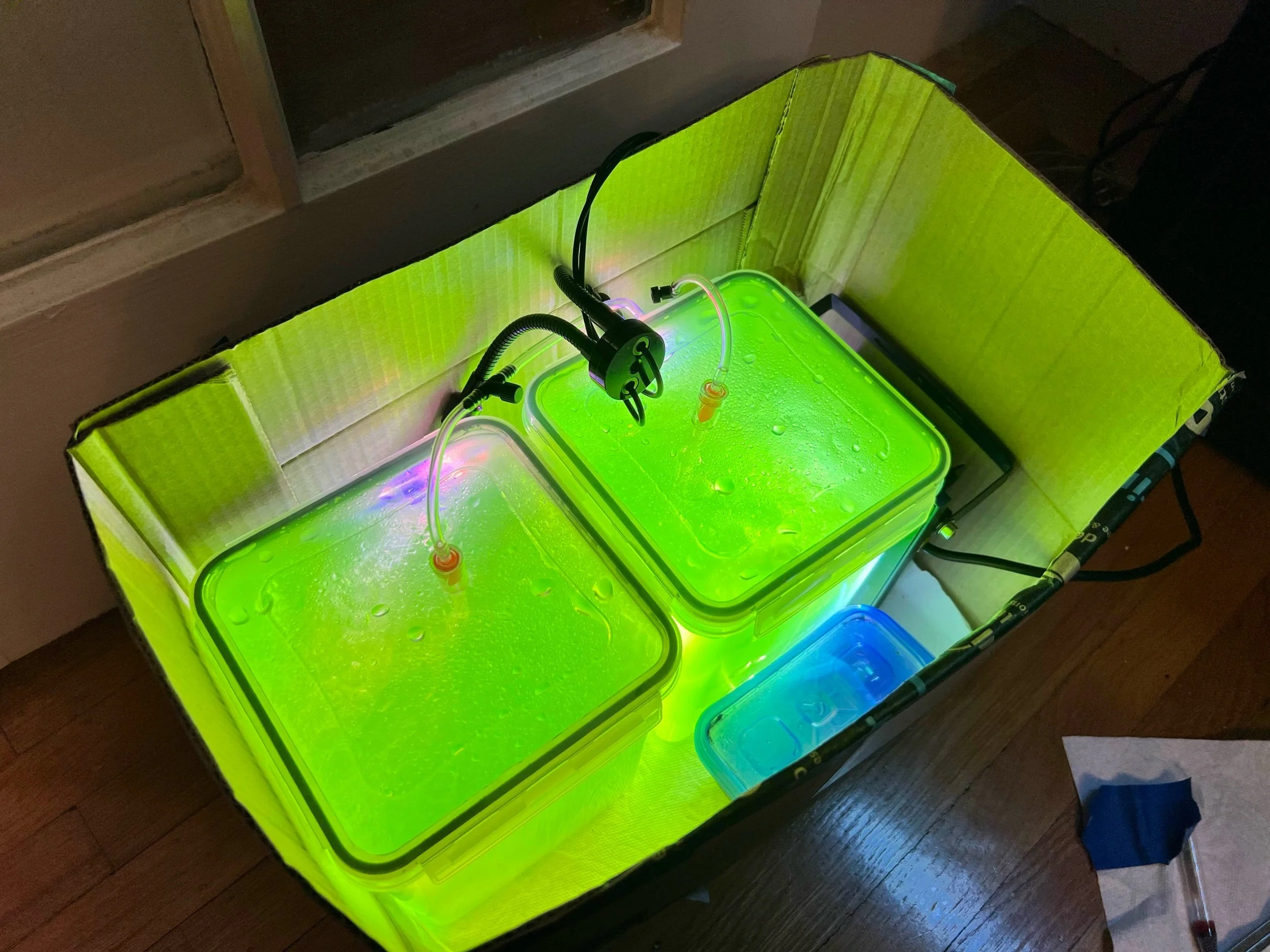
Provide bright, consistent light for optimal growth
Use LED or fluorescent lighting (5000K–6500K recommended)
Photoperiod: 12–16 hours per day
Keep light source close (2–6 inches from the container) for maximum efficiency
Avoid overheating the culture—monitor temperature if using strong lights
Keep cultures at room temperature (68°F–75°F)
Aeration:
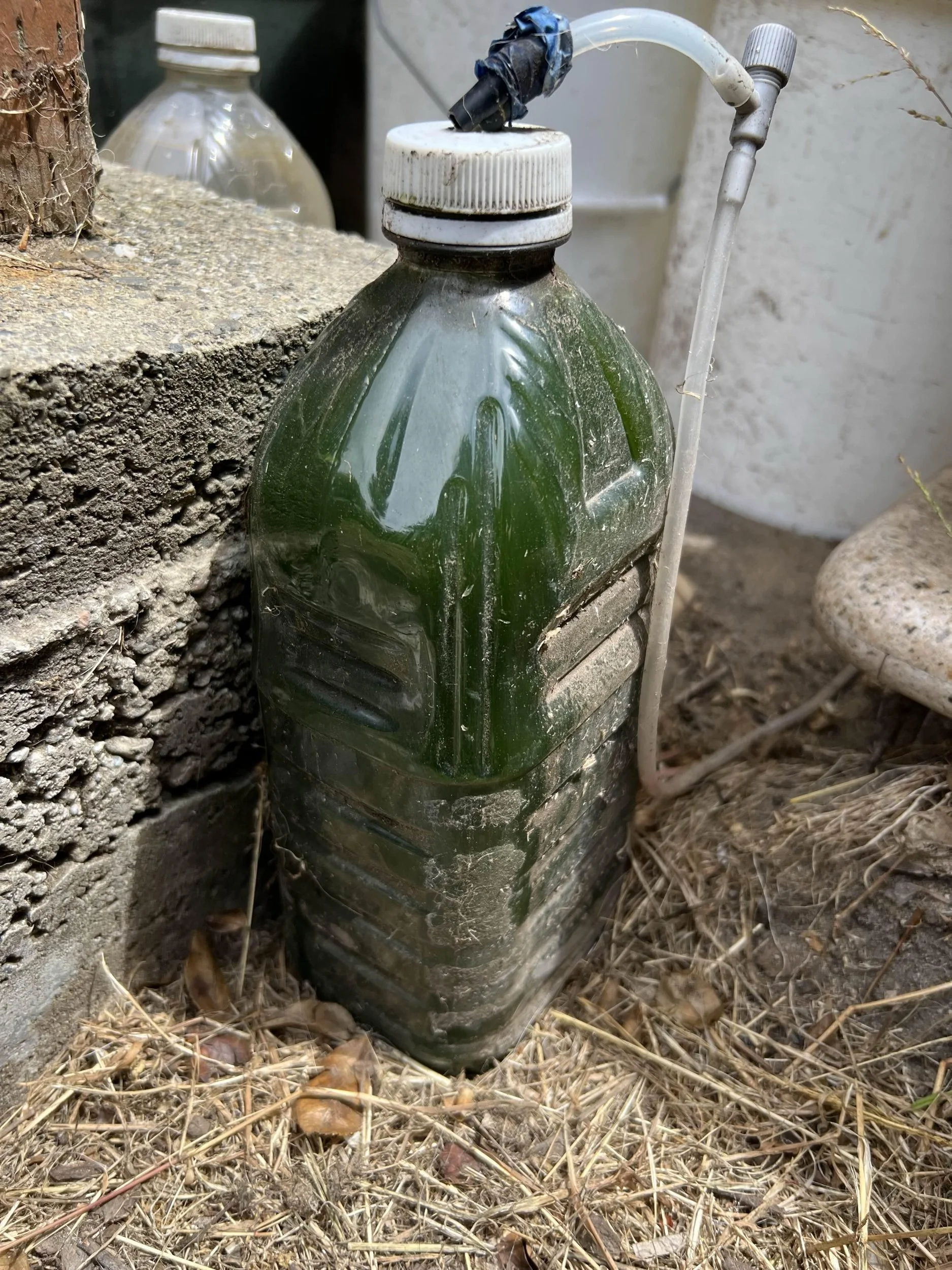
Use gentle to moderate aeration with an air pump and rigid airline tubing (standard flexible tubing is prone to clogging)
A steady stream of small bubbles is ideal to keep cells suspended
Avoid excessive “boiling” or turbulence, which can stress the culture
No air stone is required, but can be used if flow is kept gentle
Aeration also helps supply CO₂ and prevent settling
Fertilizer Dosing:
Use a phytoplankton fertilizer such as f/2 or equivalent
Typical dosing: 1 mL fertilizer per 1 liter of culture water (follow product instructions if different)
Dose fertilizer when starting a new culture or after splitting
Do not overdose—excess nutrients can cause crashes or contamination
Culture should gradually deepen to a deep emerald green color within a few days
Containers:
Use clean, food-safe containers such as:
1–2 liter bottles
Glass jars
Clear plastic containers
Salinity:
Salinity: 1.019 – 1.022 specific gravity (25–30 ppt)
This range promotes faster growth and higher culture density
Reef Salinity Note:
Cultures will still survive at full reef salinity (~1.025), but growth may slow.
When using for feeding (not culturing), it’s fine to dose directly into tanks at normal reef salinity.
For best results:
Maintain cultures around 1.020 specific gravity
Keep cultures at room temperature (68°F–75°F)
Split cultures every 5–7 days to maintain peak density
Always use clean equipment to avoid contamination
Healthy cultures should appear deep green and opaque
Pale or clearing cultures may need fertilizer or restarting
Keep a backup culture whenever possible
Nannochloropsis Sp. Phytoplankton - Salt Water 30 oz
Nannochloropsis phytoplankton is a widely used marine microalgae valued for its high nutritional content and ease of cultivation. Nannochloropsis is rich in essential fatty acids (EPA) and is an excellent food source for brine shrimp, copepods, rotifers, filter feeders, corals, and larval marine species. It also supports aquarium stability by feeding beneficial microfauna. This culture was originally sourced from Mercer of Montana.
Storage:
Keep refrigerated at 34°F–40°F
Shake gently every 3 days and before use
Best used within 2–3 weeks for maximum nutritional value
Dosing:
Add small amounts daily or several times per week
Typical starting point: a few mL per 10 gallons (adjust as needed)
Dose in a high-flow area for even distribution
Lighting and Temperature:
Provide bright, consistent light for optimal growth
Use LED or fluorescent lighting (5000K–6500K recommended)
Photoperiod: 12–16 hours per day
Keep light source close (2–6 inches from the container) for maximum efficiency
Avoid overheating the culture—monitor temperature if using strong lights
Keep cultures at room temperature (68°F–75°F)
Aeration:
Use gentle to moderate aeration with an air pump and rigid airline tubing (standard flexible tubing is prone to clogging)
A steady stream of small bubbles is ideal to keep cells suspended
Avoid excessive “boiling” or turbulence, which can stress the culture
No air stone is required, but can be used if flow is kept gentle
Aeration also helps supply CO₂ and prevent settling
Fertilizer Dosing:
Use a phytoplankton fertilizer such as f/2 or equivalent
Typical dosing: 1 mL fertilizer per 1 liter of culture water (follow product instructions if different)
Dose fertilizer when starting a new culture or after splitting
Do not overdose—excess nutrients can cause crashes or contamination
Culture should gradually deepen to a deep emerald green color within a few days
Containers:
Use clean, food-safe containers such as:
1–2 liter bottles
Glass jars
Clear plastic containers
Salinity:
Salinity: 1.019 – 1.022 specific gravity (25–30 ppt)
This range promotes faster growth and higher culture density
Reef Salinity Note:
Cultures will still survive at full reef salinity (~1.025), but growth may slow.
When using for feeding (not culturing), it’s fine to dose directly into tanks at normal reef salinity.
For best results:
Maintain cultures around 1.020 specific gravity
Keep cultures at room temperature (68°F–75°F)
Split cultures every 5–7 days to maintain peak density
Always use clean equipment to avoid contamination
Healthy cultures should appear deep green and opaque
Pale or clearing cultures may need fertilizer or restarting
Keep a backup culture whenever possible